
Traveling in Iceland as a Family: How to Stay Flexible Without Missing the Fun
Thinking about traveling to Iceland with your family? From waterfalls and glaciers to black sand beaches and geothermal pools, Iceland offers experiences that fascinate both adults and children. It is safe, easy to navigate, and full of nature-based adventures that work well for all ages.
At the same time, Iceland is famously unpredictable. Weather changes quickly, daylight hours vary by season, and travel days can feel long with kids. That is why successful Iceland family travel is less about rigid itineraries and more about staying flexible.
Read on to learn how to plan a family trip to Iceland that is stress-free and full of memorable moments.
What to Know Before Traveling Iceland as a Family
Before visiting Iceland with kids, it helps to understand how the country works for family travel.
Iceland is considered one of the safest destinations in the world. Roads are well-maintained, tap water is clean and safe to drink, and crime rates are low. Moreover, children are welcome almost everywhere. Restaurants, museums, and public facilities are generally family-friendly.
That said, Iceland requires a bit of planning awareness, especially when traveling with children. And that’s because:
The weather can change several times a day
Distances often look short on maps, but take longer to drive
Outdoor attractions may have limited restrooms or food options
Many experiences depend on the weather, visibility, and daylight
During the summer months, long hours of daylight make it easier to stay flexible and adjust plans on the go. In the winter months, daylight is limited, and days need more structure, especially when traveling between locations.
Understanding these basics from the start makes Iceland family travel much easier. You can plan with confidence, stay flexible, and focus on enjoying the experience together.
Planning an Iceland Family Trip Without a Rigid Itinerary
A rigid itinerary rarely works well when traveling in Iceland with kids. Energy levels change, weather shifts quickly, and what looks easy on a map can take longer than expected.
Instead of planning every hour, plan with clear priorities.
Focus on:
One main activity per day
One optional backup plan
Plenty of time for breaks and unplanned stops
This approach works because Iceland is full of natural surprises. A short roadside stop can become the highlight of the day. Skipping one plan often leads to a better experience.
For example:
A delayed start still leaves time for a Golden Circle stop
Bad weather can turn into a museum visit or café break
A tired afternoon becomes a relaxing swim in geothermal pools
Staying flexible reduces stress for parents and children alike. It allows kids to enjoy Iceland adventures at their own pace and helps the whole family stay engaged and relaxed.
Choosing a Central Place to Stay in Reykjavík With Kids
Choosing a central place to stay can make a noticeable difference when traveling to Iceland as a family. Reykjavík works especially well as a base, offering flexibility, comfort, and easy access to both city attractions and nearby nature.
Staying in central Reykjavík makes family travel easier because:
Popular day trips are simple to reach
Many guided tours offer nearby pick-up points
Shops, pharmacies, and grocery stores are close by
Restaurants cater well to different ages and tastes
Several interactive museums are within walking distance, ideal for rainy days
A centrally located, apartment-style stay supports this kind of flexibility. Family-friendly hotels in Reykjavík like Reykjavík Residence Hotel offer family studios, family suites, and one- to three-bedroom apartments. It gives families room to relax while staying close to everything.
Visiting Iceland With Kids During Different Seasons
There is no single best time to visit Iceland with kids. Each season offers different advantages, depending on travel style, interests, and flexibility.
Summer (June–August): Long hours of daylight, easier road conditions, and access to outdoor areas make summer ideal for sightseeing and nature stops. This is also the best season for whale watching and puffin tours, which are often highlights for families.
Shoulder seasons (May and September): Fewer crowds, lower prices, and manageable daylight create a relaxed pace that suits families who want flexibility outside peak season.
Winter months (October–March): Snow-covered landscapes, Northern Lights opportunities, ice caves, glacier hiking, snowmobiling, skiing, and generally fewer tourists in the winter months. Short daylight hours encourage simpler plans. And families may spot wild reindeer in East Iceland during this season.
Choosing the right season helps set expectations. It also makes it easier to plan family trips to Iceland that feel balanced and enjoyable for everyone.
Family-Friendly Experiences in Iceland That Work for All Ages
Iceland family travel works best when experiences allow flexibility and a comfortable pace. The activities below are well-suited to different ages and interests, making it easier for families to enjoy Iceland together.
1. Exploring Iceland’s top sightseeing routes
Some sightseeing routes in Iceland offer a lot to see without requiring long or tiring travel days. This makes them especially suitable for families traveling with kids. Short drives, frequent stops, and accessible sights help keep children engaged while allowing parents to adjust plans as needed.
Here are some family-friendly sightseeing routes in Iceland you can explore with your family:
Golden Circle: One of the most family-friendly routes, featuring Þingvellir National Park, the powerful Gullfoss waterfall, and the active Geysir area. Distances are short, and stops are easy to manage with children.
South Coast: A scenic route known for waterfalls, glaciers, and the dramatic Reynisfjara black sand beach. Many sights are close to the road, making it easy to adjust the pace.
Reykjanes Peninsula: Located close to Reykjavík, this area offers volcanic landscapes and geothermal features without long drives, which works well for shorter days or changing weather.
Snæfellsnes Peninsula: Often called “Iceland in miniature,” this region combines mountains, beaches, and small fishing villages. It suits families who want variety without committing to a long multi-day journey.
These routes make it possible to experience Iceland’s highlights while keeping days realistic, relaxed, and enjoyable for the whole family.
2. Enjoying various outdoor activities
Outdoor adventures are a big part of Iceland family travel, and many experiences are designed with families in mind. With guided tours and shorter activity options available, your whole family can:
Explore ice caves on guided tours along the South Coast, with helmets and safety equipment provided
Walk through lava tunnels like Raufarhólshellir, using lights and helmets to explore ancient lava flows
Ski at family-friendly resorts such as Bláfjöll near Reykjavík or Hlíðarfjall near Akureyri during winter
Join snowmobiling tours on glaciers like Langjökull, where older children can ride as passengers
Take boat tours on glacier lagoons such as Jökulsárlón to see icebergs up close
Most of these activities offer family-friendly options suitable for active families visiting Iceland. This makes it easier to choose adventures that suit your children’s age and energy levels.
3. Bathing in hot springs and geothermal pools
Bathing is part of daily life in Iceland. And it’s also one of the most family-friendly experiences you can enjoy on your Iceland family travel. Warm water, relaxed settings, and a strong pool culture make it easy to include swimming days in your itinerary.
Several hot springs and geothermal spas across Iceland welcome families, each with its own atmosphere and age guidelines.
Blue Lagoon (Reykjanes Peninsula): Minimum age is 2. The most popular geothermal spa in Iceland, suitable after arrival or before departure.
Laugarvatn Fontana (South Iceland): No age limit, and children aged 0–9 enter free. This works well along the Golden Circle and also offers a popular rye bread baking tour that many families enjoy.
Secret Lagoon (South Iceland): No age limit, though children under 12 are not allowed in the lagoon after 8:00 pm. The setting is relaxed and less crowded than larger spots.
Note: Even where no formal age limits apply, children must always be accompanied by an adult in geothermal pools.
Beyond the well-known lagoons, almost every town in Iceland has at least one public geothermal pool. These pools are designed for everyday use and are often the most family-friendly option.
Reykjavík alone has 18 public swimming pools, many of which include shallow areas, warm hot tubs, and water slides. Popular examples include Laugardalslaug, Vesturbæjarlaug, and Nauthólsvík, the city’s geothermal beach.
4. Hunting Northern Lights in winter
Seeing the Northern Lights is a memorable experience for many families visiting Iceland during the winter months. Families can choose from several tour options. That includes minibus tours, Super Jeep tours that travel into more remote locations, and boat tours departing from Reykjavík harbor.
It’s important to remember that Northern Lights sightings depend on both weather conditions and solar activity. Clear skies and patience are essential, and managing expectations helps keep the experience positive, especially when traveling with children.
5. Meeting Icelandic wildlife in their natural habitats
Wildlife encounters are often some of the most memorable moments for children when traveling Iceland as a family. Many tours are short, guided, and designed with safety in mind, making them suitable for a range of ages.
Depending on when you plan your Iceland family vacation, you and your kids can enjoy:
Whale watching (April–September): Available from Reykjavík, Akureyri, and Húsavík, where calm waters and frequent sightings make it a popular family activity.
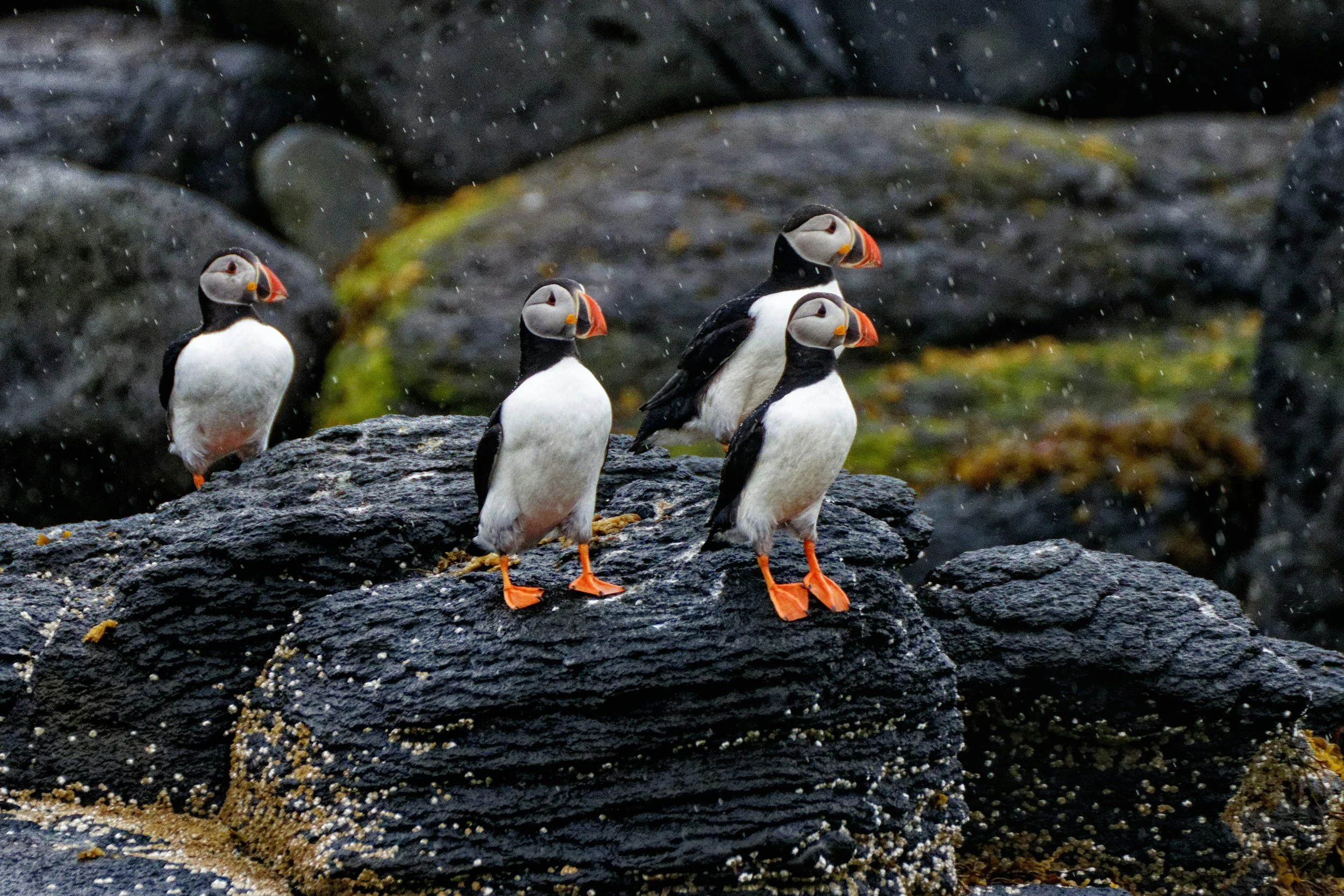
Puffin tours (May–August): Popular in Reykjavík, South Coast, and Westfjords, offering an easy way for kids to see these iconic birds up close.
Horseback riding (year-round): Often takes place along the South Coast, in the Reykjavík countryside, on the Reykjanes Peninsula, and in the Snæfellsnes Peninsula. Icelandic horses are especially popular with children due to their calm nature and smaller size.
These experiences give families a chance to connect with Iceland’s wildlife while keeping days engaging and well-paced.
6. Learning about Iceland’s Viking heritage
Learning about Iceland’s Viking past can be surprisingly engaging for children, especially when history is presented through interactive exhibits. These stops work well on slower days or when your family wants a break from outdoor sightseeing:
Saga Museum (Reykjavík): Life-sized figures bring Viking history to life. Children can also dress up as Vikings to make the experience more hands-on and engaging.
The Settlement Exhibition (Reykjavík): Built around the remains of a Viking longhouse, this museum offers a hands-on look at early life in Iceland.
Viking World Museum (Reykjanes Peninsula): Home to a full-scale Viking ship, this museum captures children’s attention through visual displays.
These sites combine learning and exploration, making Iceland’s Viking heritage easy to enjoy for the whole family.
7. Visiting niche and interactive museums
Many museums in Iceland are interactive and designed to keep visitors moving rather than standing still. This makes them a good fit for families looking for indoor activities or a change of pace from outdoor sightseeing.
Here are some interactive museums you can add to your Iceland family travel itinerary:
Lava Show (Reykjavík and Vík): A live demonstration that explains volcanic eruptions using real lava, which tends to capture children’s attention quickly.
Whales of Iceland (Reykjavík): Full-scale whale models and immersive displays help kids understand Iceland’s marine life in an engaging way.
Perlan (Reykjavík): Interactive exhibits about glaciers, volcanoes, and weather, including a real indoor ice cave.
Aurora Reykjavík: Educational displays that explain how the Northern Lights form, useful for families visiting outside peak viewing conditions.
FlyOver Iceland (Reykjavík): A virtual flight experience that gives a sweeping overview of Iceland’s landscapes without physical effort.
Árbær Open Air Museum (Reykjavík): An outdoor museum where children can walk through historic buildings and experience daily life from different eras.
Some museums are better suited to older kids, while others work well for all ages. Checking age recommendations in advance helps keep expectations realistic.
8. Trying kid-friendly Icelandic food
Food is an easy and enjoyable way for children to connect with Icelandic culture. Many local favorites are familiar, simple, and well-suited to younger tastes. This makes mealtimes stress-free during a family trip to Iceland.
Some Icelandic foods you can try with your whole family are:
Pylsur (Icelandic hot dogs): Found all over the country and often a hit with kids thanks to their mild flavor and quick serving time.
Skyr: A creamy, yogurt-like dairy product that is high in protein and available in many flavors.
Bragðarefur ice cream: Kids can customize their ice cream by mixing it with a wide variety of candies, fruits, and toppings.
Licorice-flavored chocolates: A common Icelandic sweet that older kids may enjoy trying.
Kleinur: Traditional Icelandic twisted doughnuts, lightly sweet and often found in bakeries and supermarkets. They are easy to share and usually popular with kids.
Rúgbrauð (rye bread): Dense, slightly sweet bread traditionally served with butter or fish, and easy to sample in small portions.
You may also visit local supermarkets to hunt for Icelandic candies and everyday delicacies as a simple family activity.
Getting Around Iceland as a Family: Guided Tours vs Driving
When planning an Iceland family travel, most parents choose between renting a car and joining guided tours. Both options have advantages, and many families end up combining the two.
Renting a car works well if you want:
Flexibility to set your own pace
Easy snack and bathroom breaks
Control over daily timing and stops
The ability to adjust plans based on weather or energy levels
When renting a car, families should also consider a few practical details. Winter driving may require extra caution, and weather or road conditions can affect travel times. Staying informed through forecasts and road updates helps families travel safely and adjust plans when needed.
Guided tours are a good option if you prefer:
Less stress around driving and navigation
Knowledgeable guides who engage children
Organized experiences with clear schedules
Transport included for activities
Guided tours work particularly well for whale watching, glacier activities, and Northern Lights trips. Many families find that combining a rental car with a few guided tours offers greater balance between flexibility and ease.
Simple Tips for a Stress-Free Family Trip to Iceland
When traveling Iceland as a family, small choices can have a big impact on how smoothly the trip unfolds. Planning for comfort, flexibility, and changing conditions helps parents and children enjoy the journey with less stress.
Keep these Iceland family travel tips in mind:
Choose a central base: Staying central saves travel time and keeps plans flexible. Boutique hotels in Reykjavík, such as Reykjavík Residence Hotel, make it easier to explore the city with kids.
Pack layers: Bring waterproof jackets, warm fleeces, hats, and gloves so children stay comfortable as the weather shifts throughout the day.
Carry snacks and water: Longer drives, weather delays, or late meals are easier to manage when snacks are on hand.
Check the weather and road conditions daily: Wind, rain, or fog can change plans quickly, and checking updates helps families adjust without stress.
Check tour age limits in advance: Many activities have minimum age requirements, and confirming these early avoids last-minute disappointment.
Keep plans flexible: Leaving room in the schedule allows families to respond to kids’ energy levels and changing conditions.
Use public geothermal pools for breaks: Pool visits offer a relaxing way for kids to reset between sightseeing stops.
Small adjustments like these help families stay relaxed, flexible, and focused on enjoying the experience together.
Plan Your Ultimate Iceland Family Vacation
Planning your ultimate Iceland family travel means giving your family the freedom to enjoy the journey as it unfolds. Iceland’s landscapes, wildlife, and everyday experiences offer plenty to explore without rushing from place to place. Staying flexible helps you adapt to weather, energy levels, and unexpected highlights, which often become the moments kids remember most.
Start by choosing a comfortable base. Pick a few experiences you don’t want to miss, then let the rest of the trip unfold naturally.
FAQs About Iceland Family Travel
Is Iceland a good destination for families with young children?
Yes, Iceland is a good destination to visit for families with young children. It’s safe, clean, and family-friendly, with good infrastructure and welcoming public spaces. Many attractions are also easy to visit with young children.
How many days do you need in Iceland with kids?
Seven to ten days is ideal for most families visiting Iceland. This allows time to explore key areas without rushing or spending too much time driving.
Is Reykjavík a good base for a family trip to Iceland?
Yes, Reykjavík makes a great base for a family trip to Iceland. The city offers easy access to guided tours, day trips, public pools, museums, and essential services.
What is the best time of year to visit Iceland with kids?
The best time to visit Iceland with kids depends on your travel plan and expectations. Summer in Iceland offers long hours of daylight and easier travel conditions. Winter is best for Northern Lights, while spring and fall have fewer crowds with manageable daylight.
How expensive is Iceland for a family vacation?
Iceland can be expensive. But families can manage costs by shopping at grocery stores, using public geothermal pools, and planning flexible itineraries.
